Last checked
Key facts
- Duration
- 10 days round trip from Koto
- Highest point
- 5,320 m (17,454 ft) at Kang La Pass
- Total distance
- 115 km
- Difficulty
- Strenuous, 4 of 5
- Best months
- March to May and September to November
- Months to avoid
- January to February and July to August
- Starts and ends
- Koto (near Chame) to Ngawal or Besisahar
- Accommodation
- Teahouse lodges
- Permits
- Nar Phu Restricted Area Permit (RAP), Annapurna Conservation Area Permit (ACAP)
- Typical cost
- $1,100 to $1,850 per person, guided
- Experience needed
- Previous multi-day mountain trekking experience at or above 4,000 meters is strongly advised.
What makes Nar Phu Valley unique?
Nar Phu was closed to foreign travelers until 2002, preserving intact medieval Tibetan cultures and fortified settlements. The twin valleys feature isolated Buddhist nunneries, rare blue sheep herds, and a stark high-desert topography reminiscent of ancient Tibet.
Villagers continue ancestral practices of yak herding, butter tea brewing, and spinning raw wool.
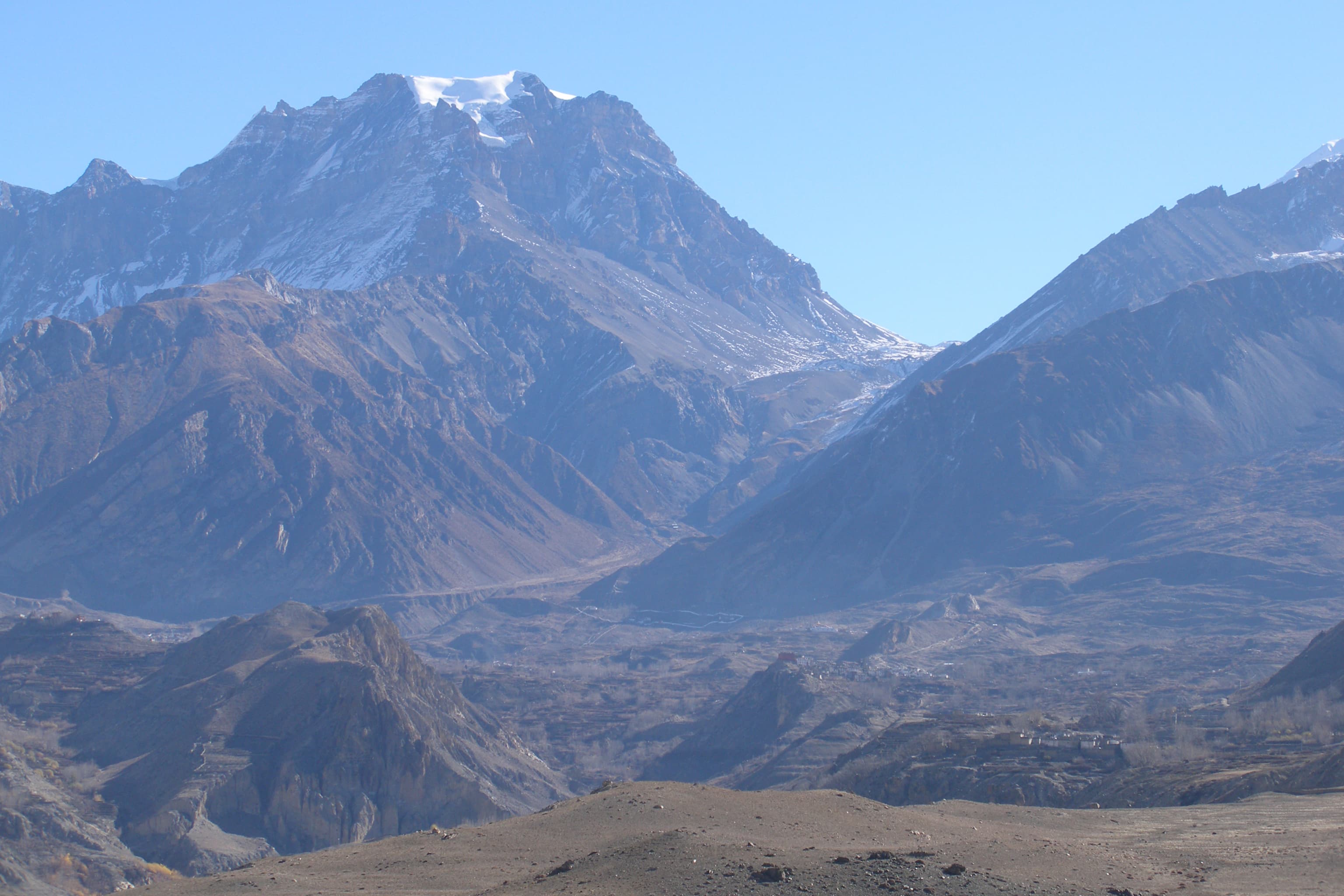
The landscape alternates between sheer granite gorges and expansive trans-Himalayan valleys.
Trekkers escape the modernization of the main Annapurna road and experience genuine frontier wilderness.
How challenging is Kang La Pass?
Kang La Pass at 5,320 m requires an early morning 1,200 m ascent on steep scree followed by a knee-jarring descent to Ngawal. It is strenuous but does not involve technical mountaineering or ropes during the dry autumn trekking season.
Weather at the pass summit can be windy and freezing even on sunny mornings.
In early spring or late autumn, hard-packed snow may require microspikes for secure footing.
The reward is an unmatched panorama of the entire Annapurna massif from the north.
Nar Phu Valley Trek itinerary, day by day
The full 10 day schedule, with sleeping altitude, walking hours and overnight stop for every day. The acclimatisation days are the ones that decide whether people finish.
Day 1
Besisahar drive to Koto
- 2,600 m
- Up 1,840 m
- 65 km
- 1 h
- Sleep: Koto
Drive upstream through the Marshyangdi river gorge past waterfalls and pine forests to the restricted checkpoint at Koto.
Read the dayShow less
The road climbs through cliff-cut rocky ledges into the upper Manang valley.
Check in at the official immigration police post where restricted area permits are stamped.
Transport: 5 hour jeep ride along Marshyangdi canyon
Highlight: Entering the Nar Phu restricted gate
Day 2
Koto to Meta
- 3,560 m
- Up 960 m
- 14 km
- 6 to 7 h
- Sleep: Meta
Cross the suspension bridge into the narrow Phu Khola gorge through dense pine forest and dramatic rocky defiles.
Read the dayShow less
Hike under overhanging cliffs and past hidden caves once used by Khampa freedom fighters.
Emerge suddenly onto open alpine meadows at Meta with views of Kang Guru.
Highlight: Dramatic gorge canyon carved by Phu Khola
Day 3
Meta to Kyang
- 3,820 m
- Up 260 m
- 12 km
- 5 h
- Sleep: Kyang
Follow high barren plateau terraces with ancient chortens and views of Pisang Peak and Annapurna II.
Read the dayShow less
Walk past the deserted winter settlements of Chyako and Jhunam.
Kyang sits beneath sheer grey cliffs and was historically a fortress retreat.
Highlight: Trans-Himalayan desert landscapes
Day 4
Kyang to Phu Village
- 4,080 m
- Up 260 m
- 11 km
- 4 to 5 h
- Sleep: Phu
Cross wooden bridges over deep chasms and pass carved stone gates into medieval stone-built Phu village.
Read the dayShow less
The entrance to Phu is guarded by ancient erosion spires and ruined watchtowers.
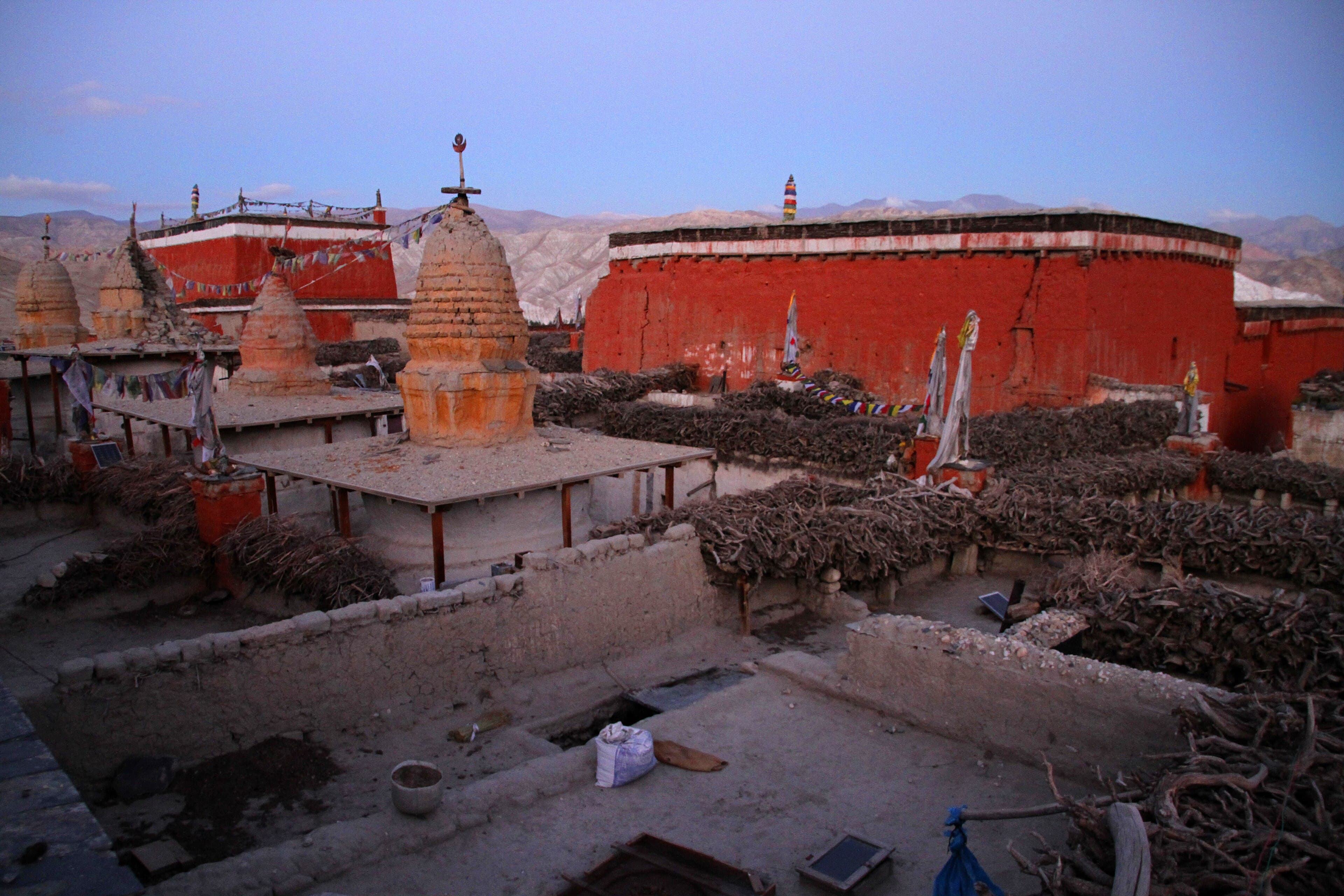
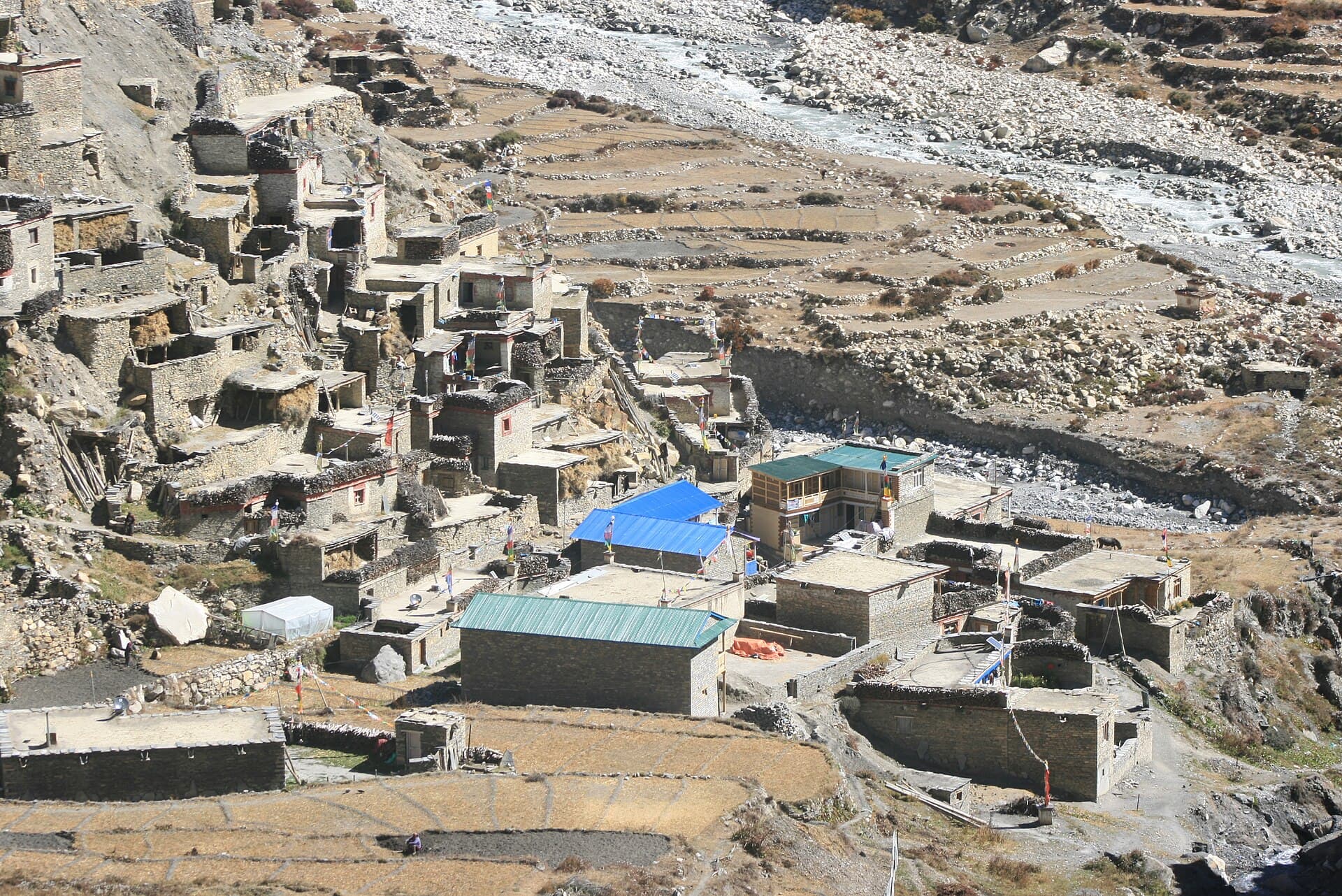
Phu houses are stacked vertically into the cliffside with flat mud roofs and prayer flag poles.
Highlight: Centuries-old stone architecture of Phu
Day 5
Acclimatization in Phu & Tashi Lhakhang
- 4,250 m
- Up 170 m
- 6 km
- 3 to 4 h
- Sleep: Phu
Visit the revered 11th century Tashi Lhakhang Gompa, one of the oldest monasteries in the Himalayas.
Read the dayShow less
Receive a traditional blessing from the village Lama at the cliffside monastery.
Observe local spinning, yak husbandry, and timeless Tibetan customs.
Highlight: Ancient Tashi Lhakhang Monastery
Day 6
Phu to Nar Phedi
- 3,490 m
- Down 590 m
- 15 km
- 6 h
- Sleep: Nar Phedi Monastery
Retrace steps down the canyon and descend to the confluence gorge to stay at Nar Phedi Nunnery.
Read the dayShow less
Cross the Mahendra bridge spanning an 80 meter deep rocky chasm.
Stay in the peaceful monastic guest rooms of the Nar Phedi nunnery.
Highlight: Overnight at Nar Phedi nunnery
Day 7
Nar Phedi to Nar Village
- 4,110 m
- Up 620 m
- 6 km
- 3 to 4 h
- Sleep: Nar
Ascend a winding series of carved stone switchbacks past colourful chortens to reach Nar village.
Read the dayShow less
Nar is larger and more pastoral than Phu, set in a wide bowl of barley and mustard terraces.
Prepare mountain gear and packed breakfast for the upcoming Kang La crossing.
Highlight: High mountain terraces of Nar
Day 8
Nar over Kang La Pass to Ngawal
- 5,320 m
- Up 1,210 m
- 16 km
- 8 to 9 h
- Sleep: Ngawal
Depart at 4 AM to climb to the prayer-flag strewn summit of Kang La Pass at 5,320 m before descending into the main Annapurna valley.
Read the dayShow less
The summit delivers jaw-dropping views of Annapurna II, Gangapurna, and Tilicho Peak.
A long loose gravel descent brings trekkers down into the charming medieval village of Ngawal.
Highlight: Summit of Kang La Pass (5,320 m)
Day 9
Ngawal to Pisang and Chame
- 2,670 m
- Down 1,000 m
- 18 km
- 6 h
- Sleep: Chame
Follow the upper trail above the Marshyangdi river through pine groves and Apple orchards back toward Chame.
Read the dayShow less
Walk past Upper Pisang and gaze up at the colossal smooth granite face of Paungda Danda.
Chame offers hot riverside thermal baths and comfortable modern teahouses.
Highlight: Smooth curved rock face of Paungda Danda
Day 10
Chame drive to Besisahar and Kathmandu
- 1,400 m
- Down 1,270 m
- 170 km
- 1 h
- Sleep: Kathmandu (Hotel)
Drive down the Marshyangdi valley out of the mountains to conclude the expedition.
Read the dayShow less
Conclude permits and exit the Annapurna conservation checkpoints.
Arrive back in the capital for warm showers and farewell dinner.
Transport: Jeep to Besisahar, then vehicle to Kathmandu
Highlight: Return to Kathmandu
What is included and what is not
Remote trails chiseled out of vertical canyon cliffs, sustained altitude in Phu village, and an early morning pass crossing over Kang La at 5,320 m.
Included in a guided price
Restricted Area Permit
Department of Immigration special permit for Nar and Phu valleys.
ACAP entry permit
Conservation area documentation and checkpost registration.
Licensed mountain guide
Mandatory certified guide for restricted zone navigation.
Teahouse lodging
Nine nights in rustic village guesthouses and nunneries.
Not included, budget for it
Emergency medical evacuation
Compulsory insurance covering high altitude helicopter rescue.
Personal electronics charging
Solar electricity fees charged in remote villages.
Personal beverages
Bottled sodas, beers, and snacks in local shops.
Permits for the Nar Phu Valley Trek
Nar Phu Restricted Area Permit (RAP)
Issued by Department of Immigration Nepal
- Foreign
- NPR 13,500
- SAARC
- NPR 13,500
Costs USD 100 per week during Sep to Nov, USD 75 per week from Dec to Aug. Minimum two trekkers with licensed guide.
Annapurna Conservation Area Permit (ACAP)
Issued by National Trust for Nature Conservation
- Foreign
- NPR 3,000
- SAARC
- NPR 1,000
Required for entering the Annapurna protected zone.
What to pack
Strong endurance and agility for traversing narrow gorge trails, high-altitude passes, and long days between remote mountain villages.
Cold weather gear
- Expedition weight down parka
- Thermal underwear sets
- Fleece mid-layer jacket
- Windproof insulated gloves
Pass crossing essentials
- Microspikes or light crampons for Kang La
- UV category 4 glacier sunglasses
- Sturdy trekking poles
- Balaclava face mask
Health and comfort
- Warm sleeping bag rated to -15C
- First aid kit with Diamox
- Biodegradable wet wipes
- Power bank charger
Frequently asked questions
Sources checked
- Department of Immigration NepalGovernment of Nepal, checked 10 October 2026
Fees and regulations in Nepal change. This page was last verified on 10 October 2026.